
Your Garage Door Shouldn't Sound Like That
You press the button, and instead of a smooth, quiet operation, your garage door announces itself to the entire neighborhood. Maybe it's a grinding sound that makes you wince. Maybe it's a sharp squeal that gets worse every week. Or maybe there's a rhythmic banging that shakes the walls of your garage.
Whatever the noise, it's not just annoying — it's your garage door telling you something is wrong. The good news is that most garage door noises point to specific, identifiable problems. And when you catch them early, the fix is usually straightforward and affordable.
Here in Rochester, where our garage doors work overtime through temperature swings, humidity changes, and heavy daily use, unusual sounds are one of the earliest warning signs that something needs attention. Let's break down the most common noises and what each one means.
Grinding or Scraping Sounds
A grinding noise is one of the most common complaints we hear from homeowners across Rochester and Rochester Hills. This harsh, metallic sound usually points to one of a few issues:
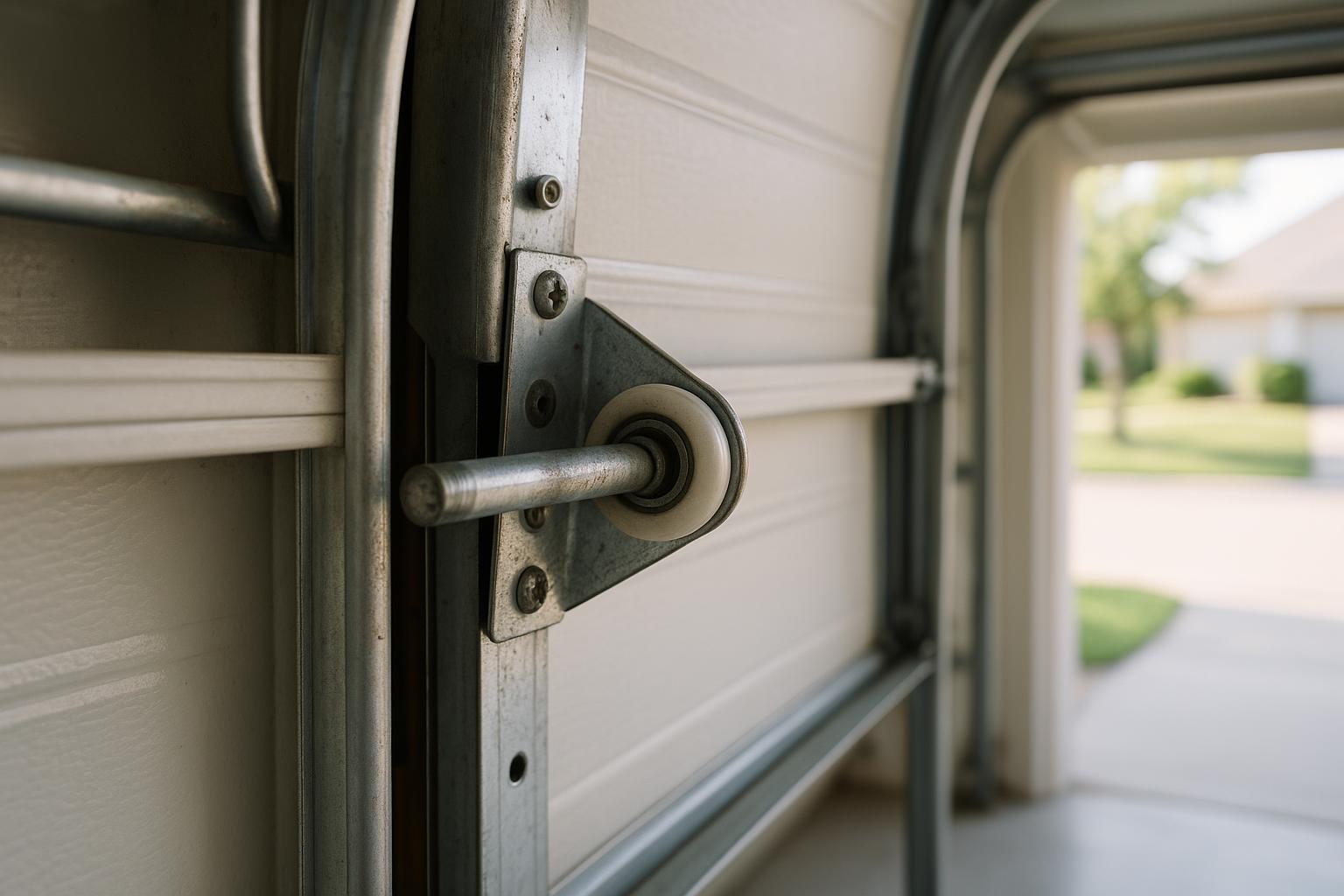
- Worn rollers: Steel rollers wear down over time and begin grinding against the track. If your rollers are original to the door and more than five to seven years old, they're likely the culprit. Upgrading to nylon rollers eliminates the noise and reduces vibration significantly.
- Misaligned tracks: If the vertical or horizontal tracks have shifted even slightly, the door can scrape against them as it moves. This creates a grinding or scraping sound and, left unchecked, can cause serious damage to the door panels themselves.
- Dry bearings: The bearings in your rollers, pulleys, and spring system need lubrication. When they run dry, metal-on-metal contact produces that unmistakable grinding noise.
If you hear grinding, take a close look at your rollers and tracks. You may notice visible wear, metal shavings, or areas where the door seems to catch or hesitate during operation.
Squealing or Screeching Sounds
A high-pitched squeal is hard to ignore — and you shouldn't ignore it. This sound almost always means something needs lubrication or replacement:
- Hinges that need lubrication: Every section of your garage door is connected by hinges, and each one has a pivot point that requires periodic lubrication. When hinges dry out, they squeal loudly with every movement.
- Torsion spring friction: Your torsion spring coils rub against each other thousands of times a year. Without proper lubrication, they produce a squealing or creaking sound that echoes through the garage.
- Worn opener chain or belt: If your garage door opener uses a chain drive, a dry or loose chain can produce a squealing sound. Belt-drive openers are generally quieter, but a worn belt can also create noise.
A simple application of garage door-specific lubricant can often eliminate squealing immediately. We recommend a silicone-based spray — never use WD-40, which is a solvent, not a long-term lubricant.
Rattling or Vibrating Sounds
Rattling is often the easiest noise to diagnose and fix. It usually means something is loose:
- Loose hardware: The nuts, bolts, and screws that hold your garage door system together can loosen over time due to the constant vibration of daily operation. A simple tightening of the hardware often solves the problem.
- Loose chain on the opener: A chain-drive opener with too much slack will rattle and vibrate during operation. Adjusting the chain tension is a quick fix.
- Worn or loose roller stems: When the stems that hold the rollers in the hinges become worn, the rollers can wobble and rattle inside the track.
While rattling might seem minor, loose components put extra stress on other parts of the system. What starts as a small rattle can eventually lead to a bigger — and more expensive — repair.
Banging or Popping Sounds
A loud bang or pop is the noise that worries homeowners the most, and for good reason. These sounds can indicate more serious issues:
- Spring problems: A loud bang that happens suddenly, even when the door isn't in use, often means a torsion spring has snapped. If you hear a single loud bang from your garage, check the spring above the door. A broken spring will have a visible gap in the coil.
- Panel flex: If your garage door panels are bowing or flexing during operation, they can produce a popping sound as they move through the tracks. This sometimes happens with older or thinner doors, especially on wider openings.
- Opener mounting issues: If the bracket that mounts your opener to the ceiling is loose or the support structure is inadequate, the entire opener can shift during operation, producing a banging sound.
Banging sounds should be inspected promptly. A broken spring is a safety hazard, and continued operation with a structural issue can cause cascading damage to other components.
Humming Without Movement
If you press your garage door button and hear the opener hum or buzz but the door doesn't move, the motor is running but the door isn't responding. Common causes include:
- Broken spring: The opener motor alone isn't strong enough to lift the full weight of the door. If a spring is broken, the motor will strain and hum without being able to move the door.
- Stripped gear in the opener: Over time, the main drive gear inside the opener can strip, especially in older units. The motor runs, but the gear can't engage to move the chain or belt.
- Locked or obstructed door: Sometimes the simplest explanation is the right one — the manual lock on the door may be engaged, or something may be physically blocking the tracks.
If your opener is humming without moving the door, stop pressing the button. Repeated attempts can burn out the motor or cause further damage.
When to Call a Professional
Some garage door noises have simple DIY solutions — tightening a bolt, applying lubricant, or clearing debris from the tracks. But many noises point to problems that require professional tools, training, and safety precautions.
You should call a professional if:
- You suspect a broken or failing spring
- The tracks appear bent or misaligned
- The noise is accompanied by the door moving unevenly or getting stuck
- Your opener motor is straining or overheating
- You've lubricated and tightened everything but the noise persists
At Rochester Garage Door Works, we diagnose noisy garage doors every week for homeowners in Rochester, Auburn Hills, Troy, Oakland Township, and Lake Orion. We'll identify the exact source of the noise, explain what's causing it, and give you honest options for fixing it — no upselling, no unnecessary replacements.
Don't Wait Until the Noise Becomes a Breakdown
Every garage door noise is a clue. The sooner you identify what's causing it, the less likely it is to turn into a major repair or a door that stops working entirely. If your garage door has been getting louder, acting sluggish, or making sounds it didn't used to make, it's worth getting it checked out.
Give us a call or schedule a service appointment. We'll get your garage door running quietly and reliably again — the way it should be.