
Your Garage Door Springs Are Under More Stress Than You Think
Every time your garage door opens and closes, the springs do the heavy lifting — literally. A standard two-car garage door can weigh between 150 and 250 pounds, and the springs are responsible for counterbalancing all of that weight. Most torsion springs are rated for around 10,000 cycles, which means if you open and close your garage door four times a day, those springs may only last about seven years.
For homeowners in Rochester and the surrounding areas, seasonal temperature swings make this even more relevant. Michigan winters put extra strain on metal components, and cold weather can accelerate wear on springs that are already nearing the end of their lifespan.
The good news is that garage door springs rarely fail without giving you some warning signs first. If you know what to look for, you can replace them on your schedule instead of dealing with an emergency when your car is trapped inside the garage on a freezing January morning.
7 Warning Signs Your Garage Door Springs Are Failing
1. The Door Feels Heavier Than Usual
If you disconnect your garage door opener and try to lift the door manually, it should feel relatively light — almost weightless if the springs are properly balanced. If the door feels noticeably heavy or you struggle to lift it past waist height, your springs are losing tension and can no longer support the door's full weight.
This is one of the earliest and most reliable indicators that your springs are wearing out. Don't ignore it.
2. The Door Opens Unevenly or Crooked
If your garage door has two springs (most double-car doors do) and one is weaker than the other, the door may rise unevenly. You might notice one side lifting faster or the door looking slightly crooked as it travels along the tracks. This puts extra stress on the tracks, rollers, and opener, which can lead to additional problems if it's not addressed.
3. You Hear Loud Squeaking or Popping Sounds
Some noise during operation is normal, but new or worsening sounds are worth paying attention to. Worn springs often produce loud squeaking, grinding, or popping noises as they struggle to wind and unwind. If your garage door has suddenly become much louder, the springs are a likely culprit.
4. There's a Visible Gap in the Spring
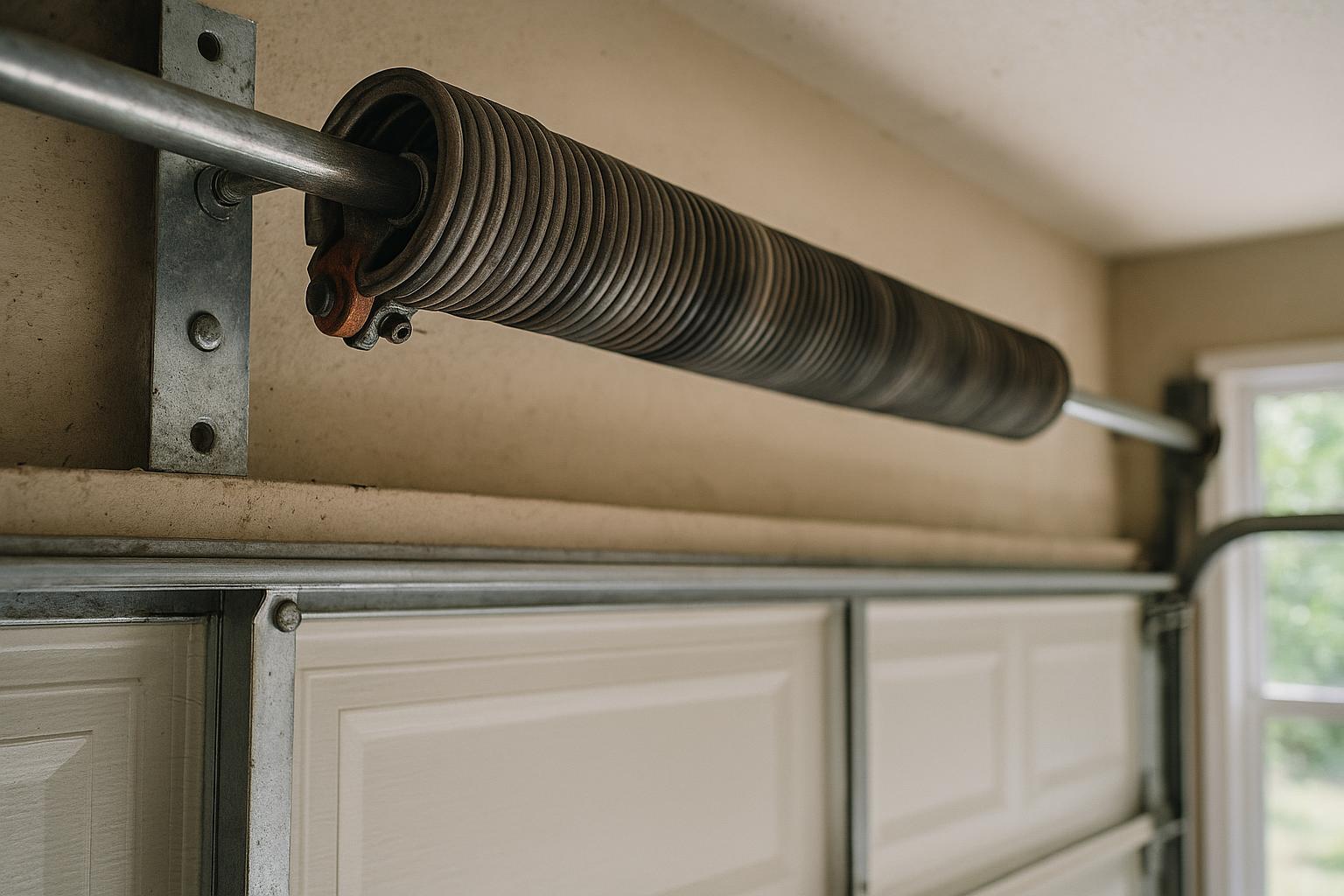
This one is straightforward. If you look at the torsion spring mounted above your garage door and see a visible gap or separation in the coils, the spring has already broken. A broken torsion spring will have a clear gap of one to two inches where the coils have separated. If you see this, do not attempt to operate the door — call a professional.
5. The Opener Struggles or Stops Mid-Cycle
Your garage door opener is designed to work with properly functioning springs. When springs weaken, the opener has to work much harder to lift the door. You may notice the opener straining, moving the door more slowly, or stopping partway through the cycle. Some openers will shut off entirely as a safety precaution when the load becomes too heavy.
Many homeowners in Rochester Hills and Troy assume the opener itself is the problem, but in a large number of cases, the real issue is the springs. Replacing the opener without addressing worn springs just puts the same excessive strain on new equipment.
6. The Door Slams Shut Quickly
Healthy springs control the speed of your garage door as it closes, providing a slow and steady descent. If your door drops faster than usual or slams shut, the springs are no longer providing adequate resistance. This is a safety concern, especially for households with children or pets.
7. You Can See Rust or Corrosion on the Springs
Take a moment to visually inspect your springs. If you notice significant rust, pitting, or corrosion on the coils, the spring's structural integrity is compromised. Rust weakens the metal and increases friction, which accelerates wear. In Michigan, where road salt and moisture are part of life for several months each year, corrosion on garage door components is common.
Can You Replace Garage Door Springs Yourself?
We strongly advise against it. Garage door springs — especially torsion springs — are under extreme tension. A spring that releases unexpectedly can cause serious injury or even death. This is not an exaggeration, and it's not a job for a weekend DIY project.
Professional technicians have the proper tools, training, and experience to replace springs safely. At Rochester Garage Door Works, we replace both springs at the same time even if only one has failed. Since both springs were installed at the same time and have experienced the same number of cycles, the second spring is usually close behind. Replacing both saves you from paying for a second service call a few months later.
What to Do If a Spring Breaks
If one of your springs has already broken, here's what you should do:
- Do not try to open the door using the opener or manually. The door is extremely heavy without spring support and can be dangerous.
- Disconnect the opener if the door is in the closed position to prevent accidental activation.
- Call a professional for repair. Most spring replacements can be completed in about an hour.
- If your car is stuck inside, let the technician know when you call so we can prioritize the repair.
We offer emergency garage door service throughout Rochester, Oakland Township, Auburn Hills, and Lake Orion for situations exactly like this. A broken spring doesn't have to ruin your entire day.
How to Extend the Life of Your Springs
While springs will eventually wear out no matter what, there are a few things you can do to get the most life out of them:
- Lubricate the springs with a silicone-based garage door lubricant two to three times per year. This reduces friction and helps prevent rust.
- Schedule annual maintenance. A professional tune-up includes checking spring tension, inspecting for wear, and making adjustments before small problems become big ones.
- Minimize unnecessary cycles. Every open-and-close cycle counts toward the spring's total lifespan. If you're using the garage door as your primary entrance to the house multiple times a day, those cycles add up quickly.
- Keep the door balanced. An unbalanced door puts uneven stress on the springs. If the door doesn't stay in place when you lift it halfway and let go, it needs to be rebalanced.
Don't Wait for a Breakdown
Catching spring problems early is always cheaper and less stressful than dealing with a complete failure. If you've noticed any of the warning signs listed above, it's worth having a technician take a look before the spring gives out entirely.
Rochester Garage Door Works provides honest assessments and upfront pricing for spring replacements across Rochester and the surrounding communities. We'll tell you exactly what's going on, what it costs, and how long it will take — no surprises. Give us a call and let's make sure your garage door is safe, balanced, and working the way it should.