
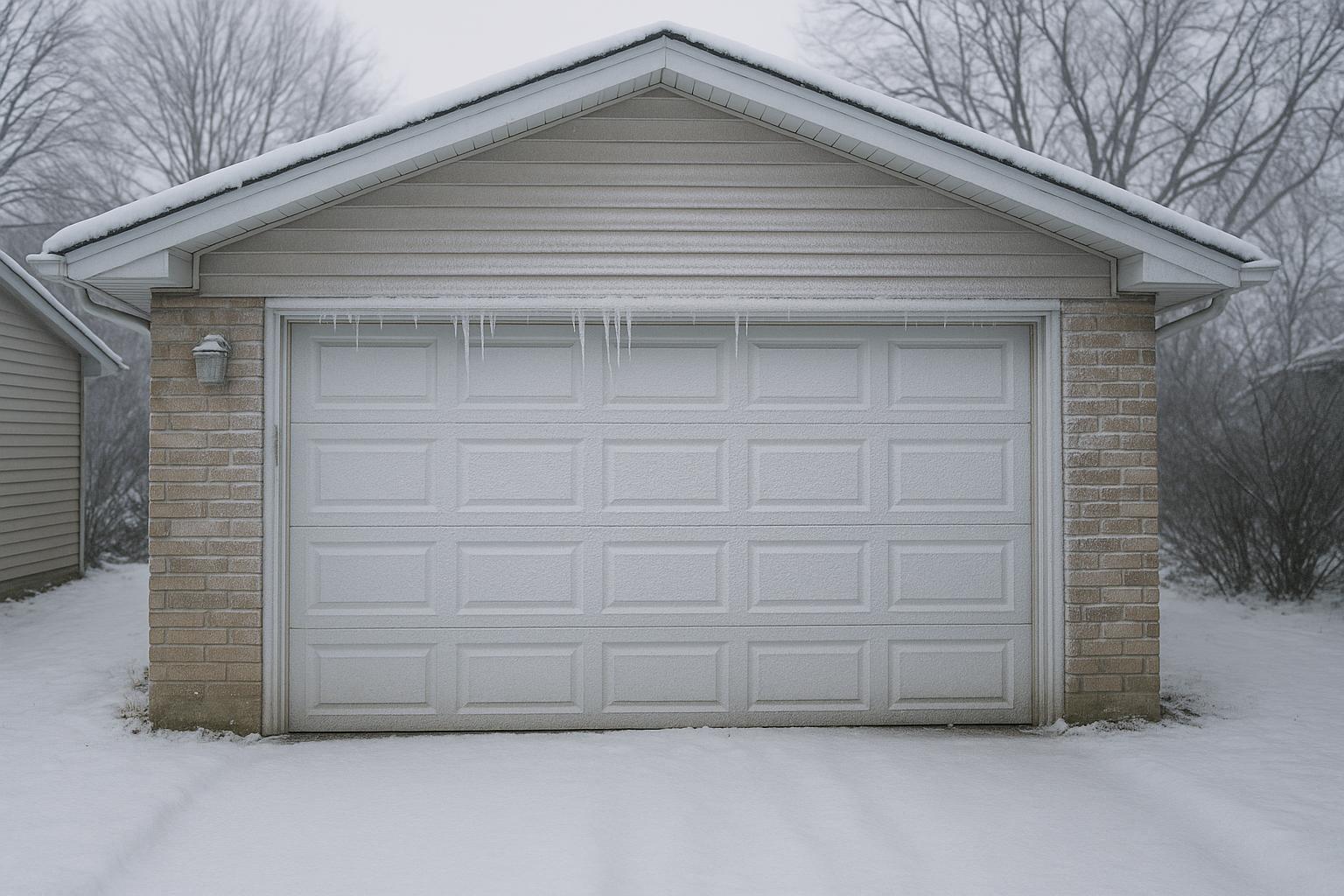
Winter and Your Garage Door Don't Always Get Along
If you've lived in Rochester long enough, you've experienced that brutal morning where the temperature drops well below freezing and your garage door refuses to budge. You press the button on your remote, hear the opener strain, and nothing happens. Or maybe the door lifts a few inches and slams back down.
It's frustrating, it's inconvenient, and it usually happens when you're already running late. The good news is that most winter-related garage door problems have straightforward causes and solutions. Here's what to look for and what to do when the cold weather turns your garage door into an immovable wall.
The Weatherstripping Is Frozen to the Ground
This is the single most common reason a garage door won't open during a Michigan winter. The rubber weatherstrip along the bottom of your door can freeze to the concrete floor or driveway when moisture collects and temperatures drop overnight.
When this happens, your opener tries to lift the door but meets resistance. Most modern openers have a safety feature that stops or reverses the door when it detects too much force, so the door stays stuck.
What You Can Do
- Never force it. Repeatedly hitting the button on your opener while the seal is frozen can burn out the motor or strip the gears.
- Use a heat gun or hair dryer along the bottom edge of the door to gently melt the ice bond.
- Carefully tap along the bottom seal with a flat tool like a putty knife to break the ice free without tearing the weatherstrip.
- Once the door is free, apply a silicone-based lubricant to the bottom seal to help prevent refreezing.
If your weatherstripping is old, cracked, or warped, replacing it before winter sets in can prevent this problem entirely. It's an inexpensive fix that saves a lot of headaches.
Metal Parts Contract in Extreme Cold
Garage doors rely on a system of metal tracks, springs, hinges, and rollers that all need to move smoothly together. When temperatures plummet — and here in Rochester Hills and the surrounding areas, we regularly see single digits and below — metal contracts. This contraction can cause tracks to tighten, rollers to bind, and springs to lose some of their tension.
You might notice the door moves sluggishly, makes unusual grinding sounds, or gets stuck partway through its travel. These are signs that the cold is affecting the mechanical components.
What You Can Do
- Apply a garage door-specific lubricant to the springs, rollers, hinges, and tracks. Avoid using WD-40, which can actually attract dirt and gum things up over time. Use a silicone or lithium-based spray instead.
- Check the tracks for any visible misalignment or buildup of ice and debris.
- If the door still struggles after lubricating, call a professional. Attempting to adjust springs or tracks yourself can be dangerous.
Your Garage Door Opener Struggles in the Cold
Garage door openers are machines, and machines don't love extreme cold. The grease inside the opener's motor and gear assembly can thicken in freezing temperatures, making the unit work harder to lift the door. Older openers are especially vulnerable to this.
If your opener hums but the door doesn't move, or if it moves the door much more slowly than usual, the cold may be taxing the motor beyond its capacity.
What You Can Do
- Check the opener's force settings. Some units allow you to adjust the amount of force the motor applies. Increasing it slightly during winter can help, but be careful not to set it too high — the safety reverse feature needs to function properly.
- If your garage isn't heated, consider a space heater or insulation to keep the temperature above the worst extremes. Even a few degrees can make a difference.
- If your opener is more than 10 to 15 years old and struggles every winter, it may be time for a replacement. Newer models handle temperature swings much better and come with improved safety features.
Hardened Grease on Rollers and Tracks
Even outside of extreme cold, the lubricant on your garage door's moving parts breaks down over time. Winter accelerates this process. Old grease hardens and creates friction instead of reducing it, which puts extra strain on every component from the rollers to the opener.
Homeowners in Oakland Township, Troy, Auburn Hills, and Lake Orion deal with the same freeze-thaw cycles that make this worse. Moisture gets into the tracks, mixes with old grease, and freezes into a gritty paste that grinds against the rollers.
What You Can Do
- Clean the tracks with a rag to remove old grease and debris.
- Apply fresh lubricant to all moving parts. This is something that should be done at least twice a year — once before winter and once in spring.
- If your rollers are worn, cracked, or no longer rolling smoothly, have them replaced. Nylon rollers tend to perform better in cold weather than bare metal ones.
The Remote or Wall Button Isn't Working
Before you assume the worst, check the simple things. Cold weather can drain the batteries in your garage door remote faster than usual. A dead battery is one of the most common — and most overlooked — reasons a garage door won't respond in winter.
What You Can Do
- Replace the battery in your remote and try again.
- Test the wall-mounted button inside the garage. If the wall button works but the remote doesn't, the issue is definitely the remote or its battery.
- If neither the remote nor the wall button works, check your circuit breaker. Power outages and surges during winter storms can trip the breaker that supplies your opener.
When to Call a Professional
Some winter garage door problems are easy to handle yourself. Replacing a battery, applying lubricant, or carefully freeing a frozen seal are all reasonable DIY tasks. But there are situations where calling a professional is the smart move:
- Broken springs. If a spring has snapped — you'll usually hear a loud bang from the garage — do not attempt to open the door manually or with the opener. Spring replacement is dangerous and requires specialized tools and training.
- Persistent opener failure. If your opener continues to struggle after basic troubleshooting, the motor or gears may need repair or replacement.
- Damaged tracks or panels. Ice buildup and repeated freezing can warp tracks and crack door panels over time. These need professional assessment and repair.
- The door is off its tracks. If the door has jumped the tracks, forcing it can cause further damage or injury.
At Rochester Garage Door Works, we handle winter garage door emergencies throughout Rochester and the surrounding communities. We understand how urgent it is when your door won't open on a freezing morning, and we show up prepared to diagnose and fix the problem quickly.
Prevent Winter Problems Before They Start
The best way to avoid getting stuck with a frozen or malfunctioning garage door is preventive maintenance before cold weather arrives. A professional tune-up in the fall can catch worn parts, lubricate everything properly, test the opener's performance, and make sure your weatherstripping is in good shape.
A little preparation goes a long way when January hits and the wind chill drops to minus ten. If your garage door hasn't been serviced recently, now is a good time to schedule a maintenance visit so you're not dealing with a breakdown when you can least afford it.