
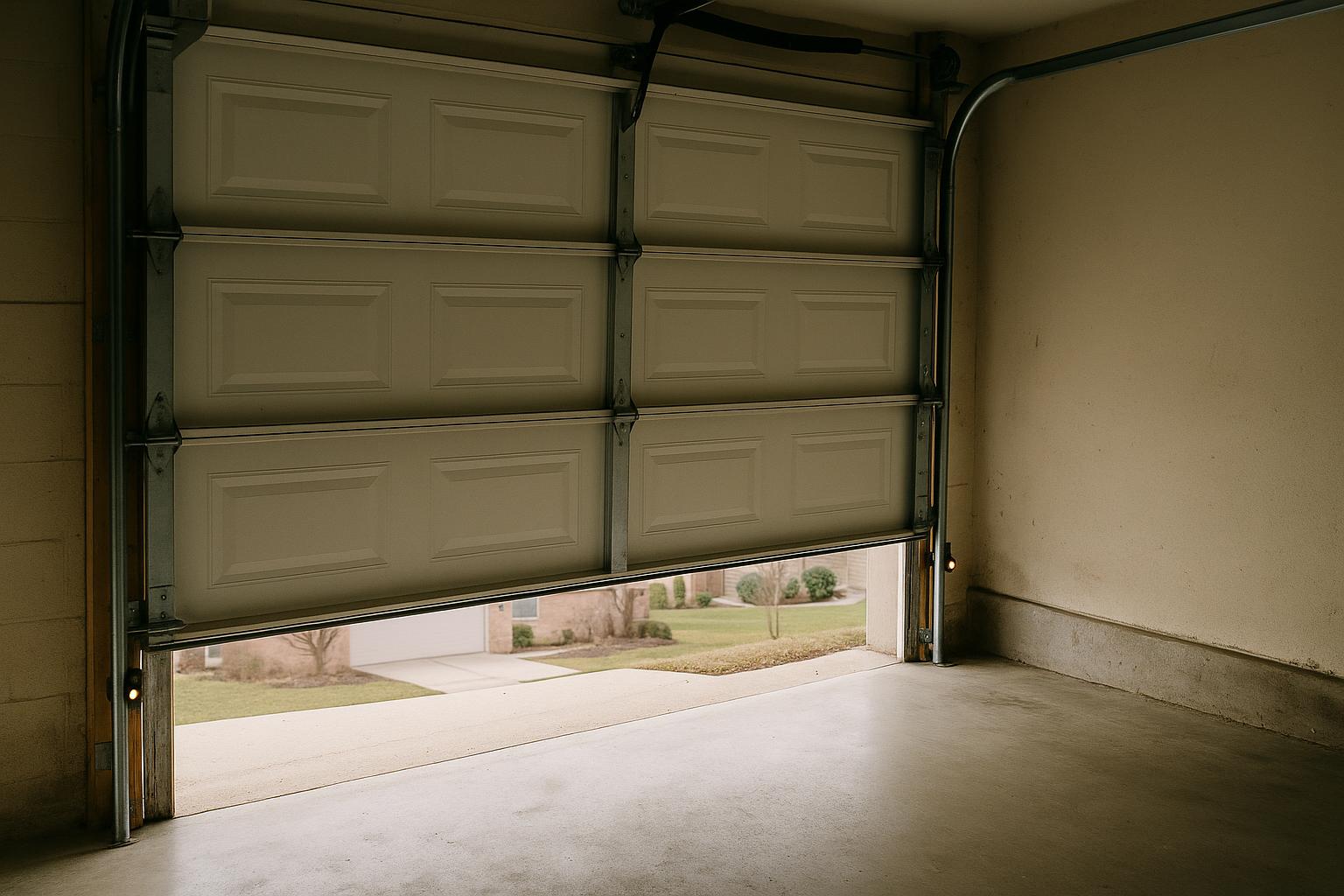
That Frustrating Moment When Your Garage Door Won't Stay Closed
You press the button on your remote, the garage door starts its descent, and then — right before it touches the ground — it reverses and goes back up. You try again. Same thing. Maybe it works on the third attempt, maybe it doesn't. Either way, you're standing in your Rochester driveway wondering what just happened.
This is one of the most common garage door complaints we hear at Rochester Garage Door Works, and it's more than just an inconvenience. A door that won't close properly leaves your home vulnerable to weather, pests, and security risks. The good news is that the cause is usually identifiable and fixable. Let's walk through the most likely reasons your garage door keeps reversing and what you can do about each one.
1. Misaligned or Dirty Safety Sensors
This is the number one cause of a garage door that reverses before closing, and it's often the easiest to fix. Every garage door opener manufactured after 1993 is required to have photo-eye safety sensors mounted near the bottom of the door tracks on both sides. These sensors send an invisible beam across the opening. If something breaks that beam — a child, a pet, a trash can — the door reverses to prevent injury or damage.
The problem is that these sensors can become misaligned from a bump, vibration, or even temperature changes common during Michigan's freeze-thaw cycles. They can also get dirty from dust, cobwebs, or road salt residue that builds up in Rochester garages over winter.
What You Can Do
- Check that both sensor lights are lit. Typically, one glows green and the other amber. If one is blinking, that sensor is likely misaligned or obstructed.
- Gently wipe the sensor lenses with a soft cloth.
- Make sure nothing is blocking the beam path — even a small leaf or piece of debris on the garage floor can trigger a reversal.
- If the sensors appear crooked, carefully adjust them until both indicator lights are steady.
If you've cleaned and adjusted the sensors and the problem persists, the wiring between the sensors and the opener may be damaged. At that point, it's best to call a professional to diagnose the issue safely.
2. Incorrect Close-Limit Settings
Your garage door opener has close-limit settings that tell it how far the door should travel before it's considered fully closed. If these settings are off — set too far, for example — the opener thinks the door has hit an obstruction when it contacts the ground, and it reverses as a safety precaution.
This issue often shows up after a new opener installation, a power outage that resets the unit, or when homeowners in Rochester Hills and surrounding areas replace their garage door panels without recalibrating the opener.
What You Can Do
- Consult your opener's manual for instructions on adjusting the close-limit switch. Most models have a small screw or dial on the back or side of the motor unit.
- Make small adjustments — usually a quarter turn at a time — and test the door after each change.
- The goal is for the door to close completely and the opener to stop without the door bouncing back up.
If you're unsure about making these adjustments yourself, our team can recalibrate your opener quickly during a service call.
3. Worn or Damaged Rollers and Tracks
As your garage door ages, the rollers that guide it along the tracks can wear out, crack, or become warped. Bent tracks create friction and resistance that the opener interprets as an obstruction, triggering the auto-reverse function.
Homes in Oakland Township, Troy, and Auburn Hills that have older garage door systems are especially prone to this issue. Years of daily use combined with temperature extremes take a toll on metal components.
Signs to Look For
- Visible damage or flat spots on the rollers
- The door wobbles or shakes as it moves
- You hear grinding, scraping, or popping sounds during operation
- The tracks appear bent, dented, or separated from the wall
Replacing worn rollers is a relatively affordable repair that can make a dramatic difference in how smoothly and reliably your door operates. Track realignment or replacement should always be handled by a trained technician because of the tension involved in the system.
4. Broken or Weakening Springs
Your garage door springs do the heavy lifting — literally. They counterbalance the weight of the door so the opener doesn't have to work as hard. When springs weaken or break, the door becomes significantly heavier for the opener to manage. The opener's force settings may not be strong enough to push the door all the way down, causing it to reverse.
You might notice the door closing more slowly than usual, the opener straining, or the door feeling unusually heavy if you try to operate it manually. Spring failure is a serious issue that poses safety risks, and we strongly recommend leaving spring replacement to professionals. The torsion and extension springs used in residential garage doors store enormous amounts of energy.
5. Problems with the Opener Itself
Sometimes the issue isn't mechanical — it's the opener's logic board or internal components. Circuit boards can fail, gears can strip, and wiring connections can loosen over time. If you've ruled out sensors, limit settings, and track issues, the opener itself may need repair or replacement.
Modern garage door openers from brands like LiftMaster, Chamberlain, and Genie are more reliable than ever, but no electronic device lasts forever. If your opener is more than 10 to 15 years old and experiencing recurring problems, upgrading to a new unit often makes more financial sense than repeated repairs.
6. Weather Stripping and Threshold Interference
Here's one that surprises many homeowners: new or swollen weather stripping along the bottom of the door can create just enough resistance to trigger the auto-reverse. This is particularly common in Lake Orion and Rochester after heavy rains when rubber seals absorb moisture and expand.
Check the bottom seal of your door. If it's bunched up, overly thick, or catching on the concrete, trimming or replacing it may solve the reversing issue entirely.
When to Call a Professional
Some of these fixes are simple enough for a handy homeowner to tackle. Cleaning sensors, checking for obstructions, and inspecting weather stripping are all safe DIY tasks. But anything involving springs, tracks, cables, or opener wiring carries real risk of injury or further damage to the system.
At Rochester Garage Door Works, we diagnose reversing issues every week. We'll identify the root cause, explain your options honestly, and get your door working reliably again — usually in a single visit. If you're dealing with a garage door that won't stay closed, don't ignore it. What starts as a minor annoyance can quickly become a security concern or lead to more expensive damage down the road.
Keep Your Garage Door Running Smoothly
Regular preventive maintenance is the best way to avoid unexpected problems like a door that reverses on its own. A professional tune-up once or twice a year keeps sensors aligned, springs balanced, rollers lubricated, and opener settings calibrated. It's a small investment that saves Rochester homeowners from costly emergency repairs and extends the life of the entire system.
If your garage door is giving you trouble, contact Rochester Garage Door Works today. We serve Rochester, Rochester Hills, Oakland Township, Auburn Hills, Troy, and Lake Orion with honest, reliable garage door service — and we always show up on time.